Report alleges Eritrea is new hub for Iranian arms bound for Houthis — but finds little supporting evidence
A Century Foundation investigation cites Yemeni and regional sources describing Eritrea's Dahlak archipelago as a transshipment point on an Iran-Houthi arms route, though the same investigation's satellite and ship-tracking review found little activity at the sites it named.
By Eyob Hadgu · 30 August 2026
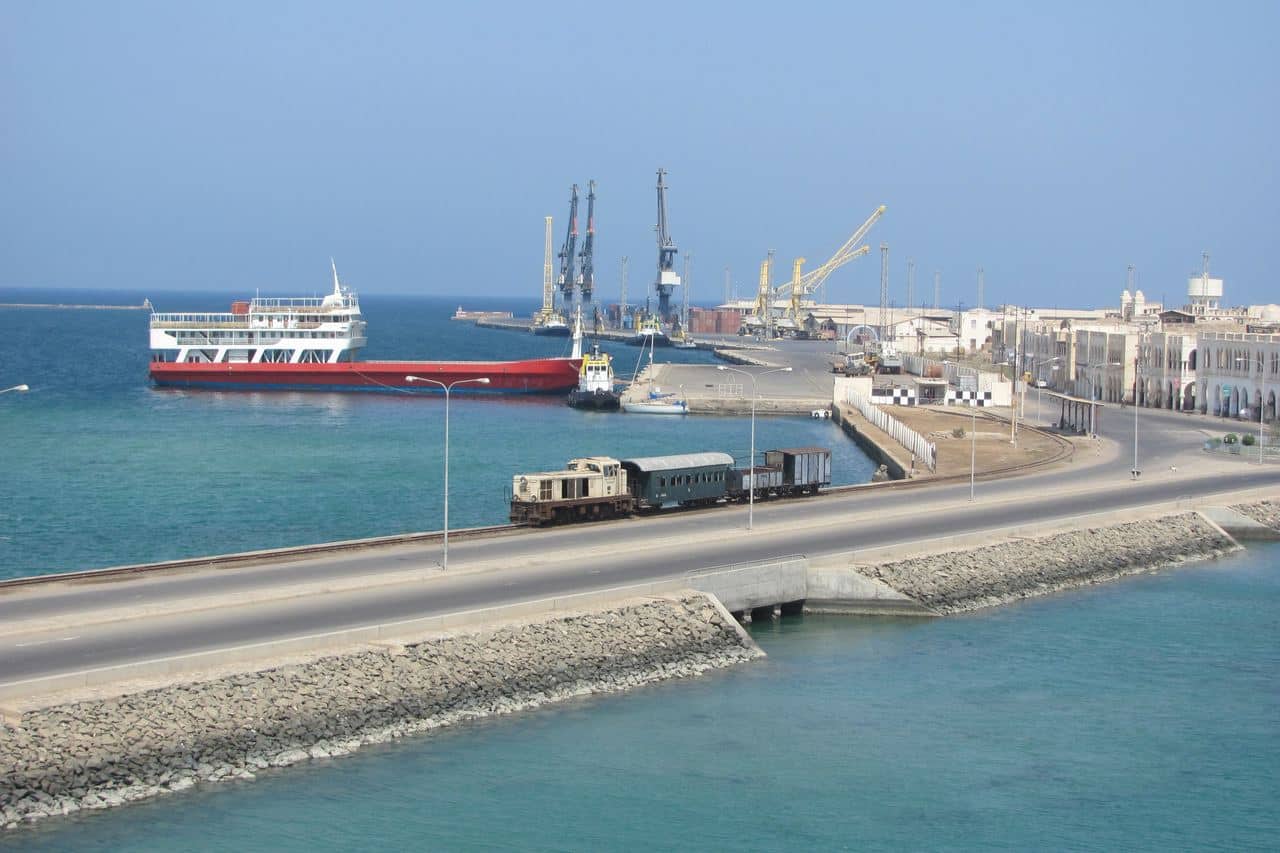
The port of Massawa, on Eritrea's Red Sea coast. Photo: Reinhard Dietrich / Wikimedia Commons, CC0 1.0 (public domain)
A report published by the Century Foundation on 24 August 2026, "From Spoke to Hub: The Houthis in Africa," says Eritrea "now also allegedly serves as yet another smuggling hub for Iranian arms en route to Yemen." The report, by researchers Peter Salisbury, Nadwa Al-Dawsari and Jay Bahadur, says arms routed through Eritrea are said to be "transferred between ships around the Dahlak archipelago, a cluster of small islands in the Red Sea, and sent on to Yemen."
"Yemeni and regional sources also claim that the Houthis are reestablishing a footprint in Eritrea, again with Iranian support," the report says. If accurate, the authors write, this would mean the Houthis have built a logistical footprint running, intermittently, along the African shores of the Gulf of Aden and the Red Sea from northeastern Somalia to northern Sudan.
The report places this within a longer history: it says Eritrea-Houthi ties allegedly date to around 2009, following an Iran-Eritrea cooperation agreement, before pausing in the mid-2010s when Eritrea aligned with Saudi Arabia and the UAE. It says a recent restoration of Iran-Eritrea ties reflects Eritrea's deteriorating relationship with the UAE, which the report says has increasingly favoured Ethiopia.
What the evidence shows
The researchers are explicit about the limits of what they found. The report's methodology included roughly 100 interviews with military, security and intelligence officials, alongside open-source and private document review, port statistics, telephone call data and ship Automatic Identification System (AIS) tracking. Despite that, the authors write that "an intensive open-source investigation of alleged smuggling sites using satellite imagery and AIS detection software showed little to no activity at named smuggling sites in the Dahlak area."
The report frames the Houthis' wider expansion — cultivating ties with groups including Somalia's al-Shabaab and Sudanese Armed Forces factions — as mirroring how Iran and Lebanon's Hezbollah built their "Axis of Resistance" network from the mid-2000s onward: first teaching conventional guerrilla tactics, then longer-range weapons systems, and eventually helping allied groups manufacture weapons from commercial components. The authors say no confirmed evidence yet shows that kind of advanced technology transfer to the Horn of Africa groups they describe, though they note such capability transfers typically only become visible after the fact.
The best time to disrupt emerging ties between the Houthis and other armed actors is now, while their relationships are at their thinnest.
This report draws on "From Spoke to Hub: The Houthis in Africa," published by the Century Foundation, and on Martin Plaut's republication of it.
Get Asmara Post in your inbox every Thursday.
One weekly email. No spam, unsubscribe anytime.