Drones hit three more Sudanese substations as Khartoum takes its complaint against Ethiopia to the UN
Monday's strikes in Kassala and Northern State brought the number of reported attacks on Sudan's electricity network to 18 in a week. Sudan accuses Ethiopia of helping the RSF; Addis Ababa has previously rejected such claims.
By Eyob Hadgu · 2 November 2026
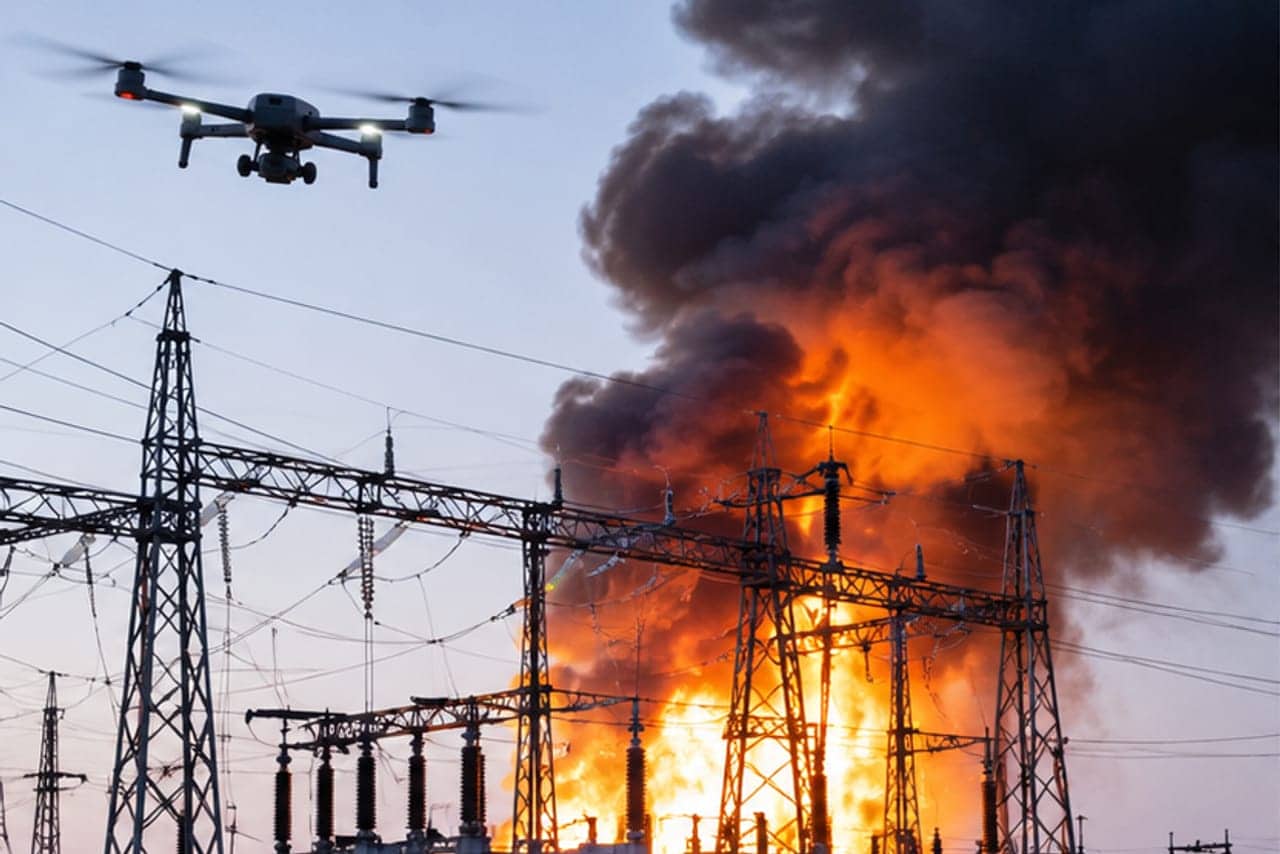
A drone over a burning electricity substation, shown in an illustration. Monday's strikes hit substations in Kassala and Northern State. (Illustration)
Drone strikes hit three electricity substations in eastern and northern Sudan on Monday, 2 November, causing widespread power outages, Al Jazeera reported. The attacks brought the number of strikes reported against Sudan's electricity network to 18 in the past week.
Facilities in New Halfa and Aroma, in eastern Kassala state, were hit early on Monday, and the al-Ghazali substation in Northern State was also targeted, according to local media cited by Al Jazeera. Videos circulating on social media appeared to show fires at the sites as civil defence teams tried to put them out. Al Jazeera said it could not immediately verify the footage or the reports.
Complaints to the UN and the African Union
On Sunday, Sudan's government said it had filed complaints against Ethiopia with the United Nations Security Council and the African Union's Peace and Security Council, accusing Addis Ababa of involvement in the campaign of attacks on civilian infrastructure and power stations. Sudan's military government says Ethiopia is helping the paramilitary Rapid Support Forces (RSF), which the army has been fighting since April 2023, to carry out the attacks.
Last week, Foreign Ministry Undersecretary Muawiya Osman Khalid said Sudan had information indicating that drones targeting civilian infrastructure had come from Ethiopian territory, including locations near Bahir Dar Airport, Arabian Post reported. Sudanese officials presented drone fragments, satellite imagery and flight-path coordinates at a briefing in Khartoum. That material has not been independently verified, and Addis Ababa has previously rejected allegations that it facilitated drone operations against Sudan.
A week of blackouts
Monday's strikes followed a run of attacks in the last days of October. A drone strike disabled the al-Markhiyat transformer station northwest of Omdurman, disrupting supplies across parts of greater Khartoum. Other strikes hit electricity and fuel facilities in El Manaqil, in Gezira state, and fuel storage near Haya in Red Sea state, including infrastructure connected to the Bashayer oil export terminal, Arabian Post reported. Last Thursday, drones hit the Um Dabaker thermal power station in Rabak, White Nile state, cutting electricity to White Nile and North Kordofan.
The state-owned Sudan Electricity Holding Company warned that extensive damage to transformers and related equipment threatened the stability of the national grid. The UN Office for the Coordination of Humanitarian Affairs has expressed concern about the attacks, and humanitarian organisations have warned that long power cuts could affect hospitals and water pumping stations.
RSF defections in Blue Nile
The Sudanese army also said on Monday that a group of RSF members had surrendered to its forces in Damazin, the capital of Blue Nile state. The announcement followed a declaration by senior RSF commander Siddiq Ander, in video footage obtained by Al Jazeera, that he had defected.
The army said the group's commander had provided information about the management of military operations in Damazin, including "Ethiopian support" for the RSF.
A wider regional rivalry
The accusations add to a widening dispute across the Horn of Africa. Asmara Post reported in September that Eritrea is reported to back Sudan's army while Ethiopia backs the RSF, with researchers warning that the long-standing rivalry between Addis Ababa and Asmara was spilling into Sudan's war. Later that month, Ethiopia's army chief, Field Marshal Birhanu Jula, accused Eritrea of acting as a go-between for foreign powers backing armed groups fighting federal forces, without presenting public evidence. Eritrea, Sudan and Egypt all denied the claim.
This report draws on reporting by Al Jazeera and Arabian Post.
Get Asmara Post in your inbox every Thursday.
One weekly email. No spam, unsubscribe anytime.