Leaked documents allege Sudan's army built and concealed a chlorine weapons stockpile
A trove of videos, documents and messages reviewed by The Washington Post points to a secret Sudanese Armed Forces programme that allegedly produced hundreds of chlorine bombs. Sudan's government denies developing or using chemical weapons.
By Eyob Hadgu · 7 September 2026
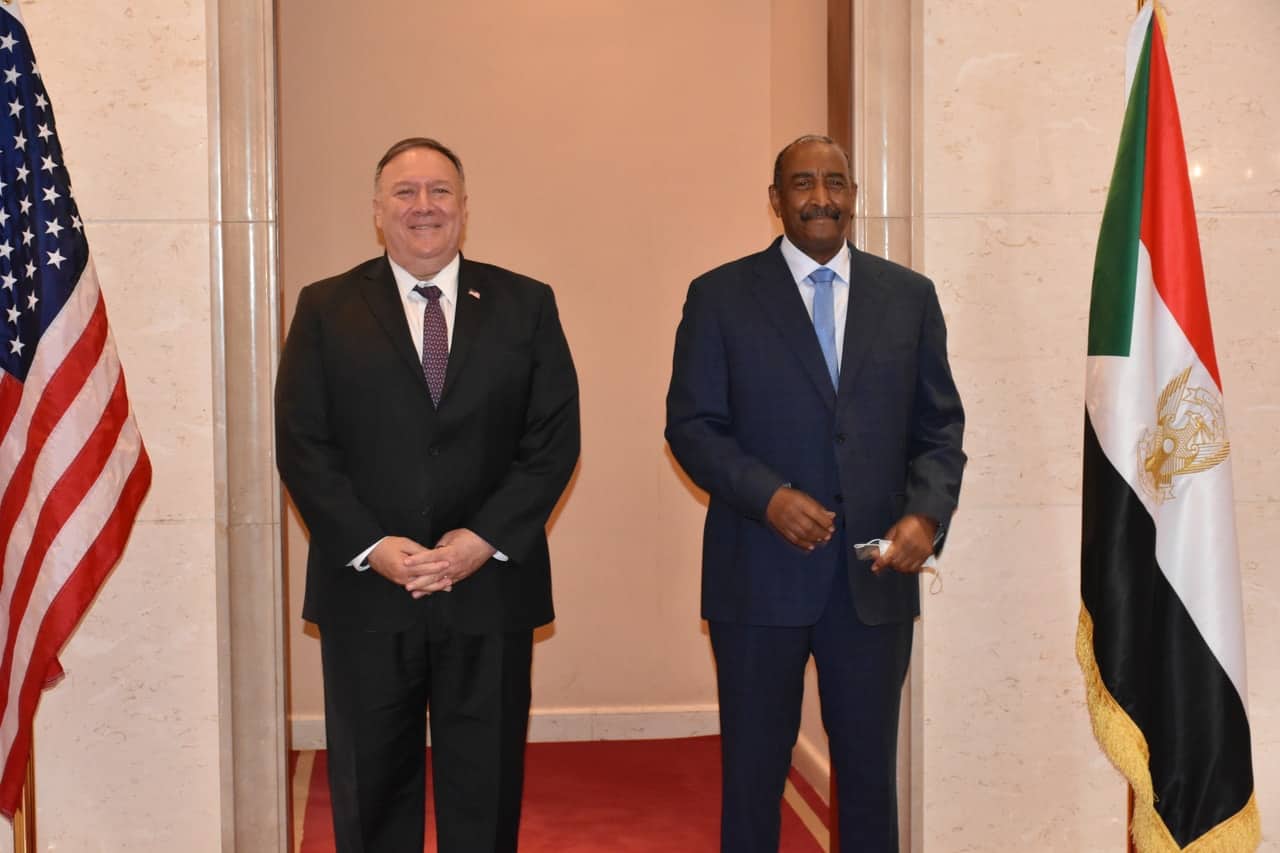
General Abdel Fattah al-Burhan, pictured in Khartoum in 2020. Documents reviewed by The Washington Post allege his government concealed a chemical weapons programme. Photo: Alsanosi Ali / U.S. Department of State, public domain
Sudan's military built a secret stockpile of chlorine-filled bombs and senior officers then worked to conceal it, according to a trove of internal videos, documents, text messages and voice notes reviewed by The Washington Post and published on 5 September.
The materials were provided to the newspaper by Middle Eastern security officials, the Post reported in an investigation by Greg Miller and Elizabeth Dwoskin. They indicate that the Sudanese Armed Forces (SAF) diverted chlorine shipments intended for drinking water treatment, hid warhead production on military bases, tested crude aerial bombs at a desert site and drew up target lists for the use of toxic gas.
The Post said the documents describe the assembly and storage of roughly 290 chemical munitions, each said to contain 15 kilograms of chlorine gas and 20 kilograms of explosives, and that the army may have used more than 100 of the weapons.
More than two dozen Western intelligence officials, chemical weapons inspectors and human rights experts who examined the materials described them as credible, according to the Post, while cautioning that a definitive assessment would require access to the sites — access that has been denied since the war began in April 2023.
The officer at the centre
The files identify Tariq Madani, an SAF officer, as the alleged architect of the programme. The US Treasury Department sanctioned Madani in June in his role as managing director of Target Multiactivities Company Ltd, a Sudanese firm the Treasury said imported explosives from suppliers in Egypt and India for bombs used by the army.
One document reproduced by the Post describes a revised warhead: "the main purpose of the new design is to conceal any evidence of the use of chemicals and to release the gas from the tank directly in a perfect way".
In a voice note attributed to Madani, he is said to describe obtaining "chlorine cylinders which are used for sanitation and to kill bacteria" from a water purification facility, noting they "come through U.N. health care programs or whatever" and that "we took some of them from there".
Contacted by the Post, Madani said: "I don't know about this. I am a civilian and this is a military question that you should ask a military person because I don't know about this subject."
A text message sent to a military officer involved in airstrikes included video of an apparent victim with charred skin and the words: "Your cooking."
Denials and a domestic inquiry
Sudan's government and army did not immediately respond to the Post's requests for comment, the newspaper said, and General Abdel Fattah al-Burhan and other officials have denied developing or using chemical weapons.
The Post reported that al-Burhan announced the formation of a Sudanese investigation committee in May 2025 into the allegations, and that Madani was appointed to it "due to his expertise". In the autumn of 2025 Sudan announced the inquiry's findings, saying that "based on available evidence and data from field measurements … there is no evidence of chemical or radioactive contamination".
The documents point to suspected chlorine attacks in September 2024, including at the Al Jaili oil refinery and the Garri military base, and identify Merowe air base as a storage site.
The United States determined in April 2025 that Sudan's government had used chemical weapons in 2024, Semafor noted, though the State Department released little public evidence at the time.
The allegations concern the SAF, which has been fighting the paramilitary Rapid Support Forces since April 2023. Semafor reported that the weapons were allegedly developed and used against the RSF.
This report draws on reporting from The Washington Post, Semafor and Martin Plaut.
Get Asmara Post in your inbox every Thursday.
One weekly email. No spam, unsubscribe anytime.