Ethiopian state media takes aim at Eritrea's dependence on diaspora money as the war of words grows
An analysis by the Ethiopian News Agency argues that Eritrea's economy relies on emigration, remittances and a 2 per cent diaspora tax. Many of its figures are unsourced, and it was published by a government now in open dispute with Asmara.
By Eyob Hadgu · 25 October 2026
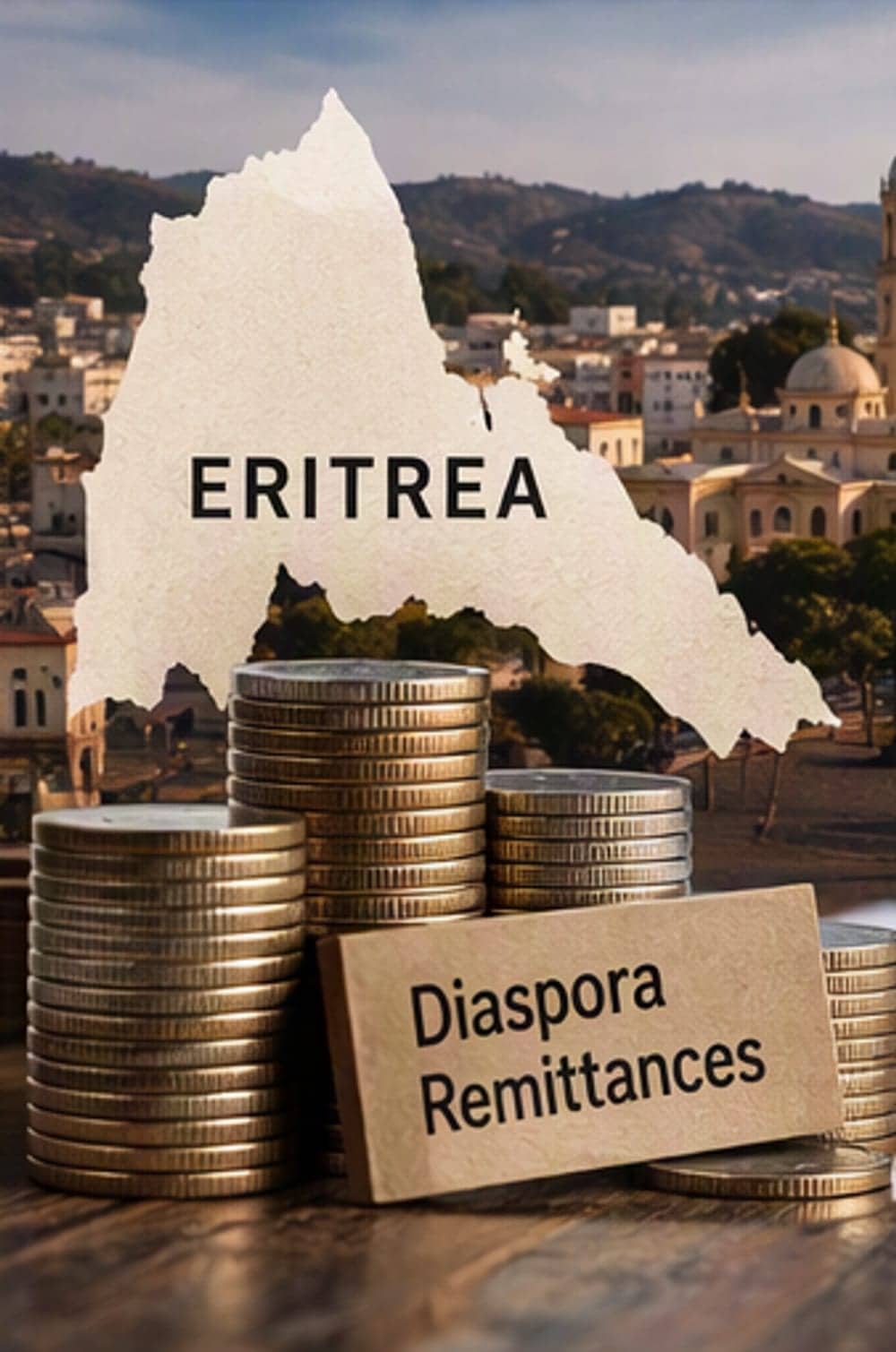
The Ethiopian News Agency analysis estimates diaspora remittances at about 30 per cent of Eritrea's economy, a figure it does not source. (Illustration)
Ethiopia's state news agency has published a long analysis arguing that Eritrea's economy depends on its citizens leaving the country, a sign that the dispute between the two governments is now being fought in the media as well as on the border.
The piece, published by the Ethiopian News Agency (ENA) on 20 October and republished by AllAfrica, carries no individual byline.
What the analysis argues
ENA argues that Britain's threat to ban Eritreans from entering the UK has exposed contradictions in Eritrea's doctrine of self-reliance.
It says open-ended national service drives Eritreans to emigrate, and that the money they send home then helps fund the system that pushed them out. It describes three linked pillars of state control: national service, ownership of the economy by the ruling party, and control of money coming in from abroad.
It names party-linked companies including the Red Sea Trading Corporation and Himbol Financial Services, and cites the UN Commission of Inquiry, which has described conditions in national service as "slavery-like."
The figures it uses
ENA estimates remittances at 200 to 300 million US dollars a year, about 30 per cent of Eritrea's economy, and says the 2 per cent tax on Eritreans abroad is collected through embassies and informal networks. It does not give sources for these figures.
It also says about 5,875 Eritreans arrived in the UK by small boat in the year to June 2026, around 18 per cent of the total, and that UK initial grant rates for Eritrean asylum claims are around 83 to 84 per cent.
The agency cites UNHCR figures for the end of 2025 of about 555,000 Eritrean refugees and more than 118,000 asylum seekers.
Why the source matters
ENA is the state news agency of Ethiopia, whose government accuses Eritrea of invading Tigray. Eritrea cut diplomatic ties with Ethiopia on 1 October. The analysis is one-sided and should be read as part of that dispute.
Asmara Post has found no direct Eritrean response to the piece. Eritrea has dismissed the UK visa threat as a "political gimmick" and says the 2 per cent tax rests on a 1994 law.
The concerns about national service are not new or unique to Ethiopia. UN investigators and human rights groups have documented them for years, and they are the main reason most Eritrean asylum claims are accepted abroad.
This report draws on the Ethiopian News Agency analysis as republished by AllAfrica, and on earlier Asmara Post reporting.
Get Asmara Post in your inbox every Thursday.
One weekly email. No spam, unsubscribe anytime.