Eritrea's port decline was self-inflicted, not foreign "imperialism," essay argues
A widely shared essay published via journalist Martin Plaut's Horn of Africa blog says decades of isolationist policy, not UAE investment, reduced Assab and Massawa to a fraction of their former cargo volumes.
By Eyob Hadgu · 17 September 2026
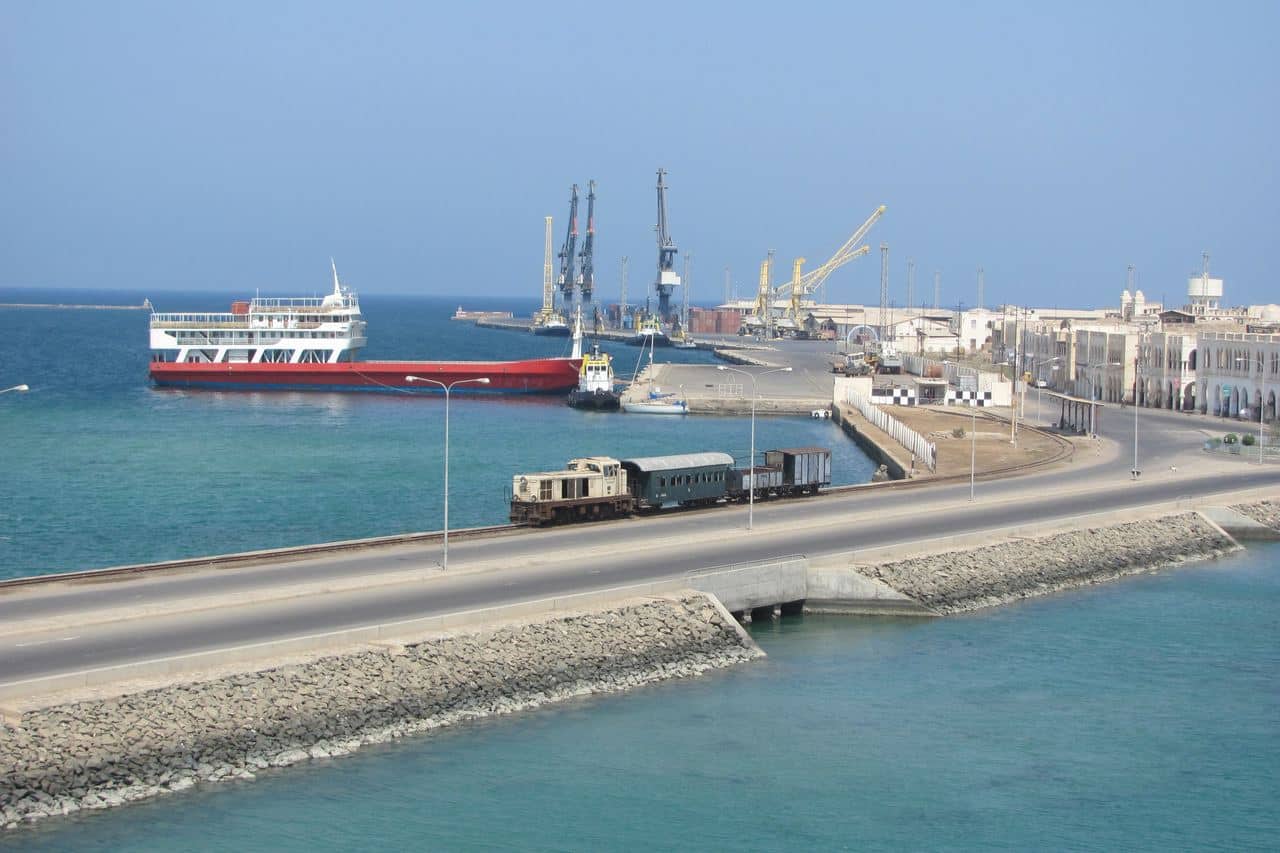
The port of Massawa, on Eritrea's Red Sea coast. Photo: Reinhard Dietrich / Wikimedia Commons, CC0 1.0 (public domain)
An essay published on 16 September 2026 via journalist Martin Plaut's Horn of Africa blog argues that Eritrea's government is using the phrase "port imperialism" to obscure a decline in port capacity caused by its own isolationism, rather than by foreign investment. The piece, written by Habtom Ghebrezghiabher, responds to Eritrean Foreign Minister Osman Saleh, whom the author credits with popularising the term.
A port that once moved millions of tons
The essay cites historical cargo figures for Eritrea's two main ports. Assab handled about 1.3 million tons of dry cargo a year in the mid-1980s, rising to 2.8 million tons of total cargo in 1986/87, before falling to 2.3 million tons by 1997, according to the piece. Massawa moved 470,000 tons in 1986/87 and later reached 780,000 tons, it says.
For comparison, the essay points to Djibouti's Doraleh Container Terminal, which handled 1.23 million TEUs (twenty-foot equivalent units) in 2024, and Somaliland's Berbera Port, built with a 500,000-TEU annual capacity, a 17-metre draft and a 1,050-metre quay.
Infrastructure decay beyond the ports
The essay traces the same isolationism through wider infrastructure. It says the Hirgigo power plant was built with a capacity of 134 megawatts but now runs at only 51.5 megawatts, and that Asmara's airport, built in 1922 and opened to commercial traffic in the 1930s, has deteriorated. It also describes broken water networks and chronic fuel shortages for tankers serving the ports.
An argument, not a settled account
The essay's central claim is that President Isaias Afwerki's government is using "port imperialism" to shift blame for that decline onto the UAE and other foreign investors rather than acknowledge policy choices made in Asmara. This is one analyst's argument published on an opposition-aligned platform, not an independently verified account, and the Eritrean government's own response to this specific critique was not found in the sources reviewed for this report.
This report draws on reporting published via Martin Plaut's blog, written by Habtom Ghebrezghiabher.
Get Asmara Post in your inbox every Thursday.
One weekly email. No spam, unsubscribe anytime.